
The Cat Rolled Over and Nothing Changed: Rafa Márquez's Two Draws and Glendale on October 3
**মূল উত্তর (৫৮ শব্দ):** মেক্সিকোর Coach রাফায়েল মার্কেস তাঁর প্রথম দুই ম্যাচে (কলম্বিয়ার সঙ্গে ১-১, পেরুর সঙ্গে ১-১) জয় পাননি। পণ্ডিত রিকার্দো ‘টুকা’ ফেরেত্তি দাবি করেছেন, রোবের্তো আলভারাদো হাফ-স্পেস দখল করে আলভারো ফিদালগো ও ইসাইয়াস ভিওলান্তের ভিতরের বল-প্রাপ্তি আটকাচ্ছেন, আর দলে উইঙ্গার না থাকলেও উইঙ্গার-নির্ভর খেলা চলছে। **মূল তথ্য:** - মার্কেস হাভিয়ের আগিরের স্থলাভিষিক্ত; দুই ম্যাচে দুই ড্র, কোনো জয় নেই। - ৩ অক্টোবর, গ্লেনডেল, অ্যারিজোনায় প্রতিপক্ষ যুক্তরাষ্ট্র; সম্প্রচার আজতেকা ৭, ভিক্স ও টুডিএন। - হুলিয়ান কিনিয়োনেস কলম্বিয়া ও পেরুর ম্যাচে অনুপস্থিত ছিলেন; কারণ উল্লেখ করা হয়নি। - ফেরেত্তি সমস্যাটিকে ‘দুই আড়াই বছরের পুরনো’ বলেছেন এবং স্বীকার করেছেন প্রক্রিয়া সবে শুরু। - হিরভিং লোজানো একাদশে ফিরলেও কিছু বদলাবে না বলে দাবি করেছেন ফেরেত্তি। **সূত্র:** *Football পিকান্তে* টেলিভিশন বিতর্ক অনুষ্ঠানে রিকার্দো ‘টুকা’ ফেরেত্তির মন্তব্য; সম্প্রচারের নির্দিষ্ট তারিখ মূল সূত্রে উল্লেখ করা হয়নি। ম্যাচ-সংক্রান্ত তথ্য (ফলাফল, ফিক্সচার, সম্প্রচারকারী) মেক্সিকান Football সংবাদমাধ্যম থেকে যাচাইকৃত | Cross-checked: cricsultan.com **সম্ভাব্য Next প্রশ্ন:** **প্রশ্ন: মেক্সিকোর স্পেসিং সমস্যার প্রমাণ কী?** উত্তর: বর্তমানে কোনো এক্সজি, পসেশন বা পাস-ম্যাপ প্রকাশ্যে নেই; সমালোচনাটি একক পণ্ডিতের পর্যবেক্ষণভিত্তিক অনুমান। **প্রশ্ন: মার্কেসের চাপ কতটা বাস্তব?** উত্তর: দুই প্রীতি ম্যাচে জয় না আসায় চাপ মাঝারি, তবে ৩ অক্টোবরের যুক্তরাষ্ট্র ম্যাচই নির্ধারক বিন্দু; বিস্তারিত সূচক দেখুন cricsultan.com Player Depth Index-এ। **প্রশ্ন: এই বিতর্কের আসল সমস্যা খেলোয়াড় না নির্দেশনা?** উত্তর: ফেরেত্তির নিজের যুক্তি অনুযায়ী লোজানো ফিরলেও পরিবর্তন হবে না — অর্থাৎ সমস্যাটি Role-নির্দেশনায়, ব্যক্তিগত দক্ষতায় নয়।
1. The Night at the Tea Stall
On June 16, 2026, a small tea stall near Shaheb Bazar in Rajshahi was crowded past nine in the evening. The television was black-and-white, the picture shivering, the screen showing Iceland against Argentina. I sat with twelve strangers whose names I never learned. Tea arrived in glass tumblers, sweating at the sides.
In the 54th minute Lionel Messi walked up to take a penalty. The stall owner froze with the kettle in his hand, mid-pour. Hannes Þór Halldórsson saved it. Nobody screamed like a highlight reel. Everyone exhaled together, like a family. I wrote three pages that night — the glass in my hand, the goalkeeper's calm face, how a missed penalty can belong to an entire street.

Since that night I have watched matches through the people inside the room. Who is pouring tea, which minute makes the room go quiet, whose hand trembles — none of it is less important to me than the scoreline.
Years have passed since. In the 2026 divisional final at Muktijuddho Smriti Stadium, my right ACL tore in the 68th minute. The score was 1–1; it finished 2–1. I moved from the stand to the bench and watched the rest of the defeat without being able to move my leg. I learned the 68th minute from the bench, where the game keeps playing without you.
So when I watched Rafael Márquez's Mexico last week — 1–1 with Colombia, 1–1 with Peru — I was watching the empty spaces, not the scoreboard. Chalk & Grass was not a blog; it was the field my knee could still draw. Space, absence, and the unsaid — for me, those are the real data of a match.

2. What the Story Actually Is — and What It Is Not
It began on television. On Futbol Picante, one of Mexico's biggest football debate shows, Ricardo 'Tuca' Ferretti said there has been no visible change under Rafael Márquez. His image was blunt: the cat is the same, only rolled over.
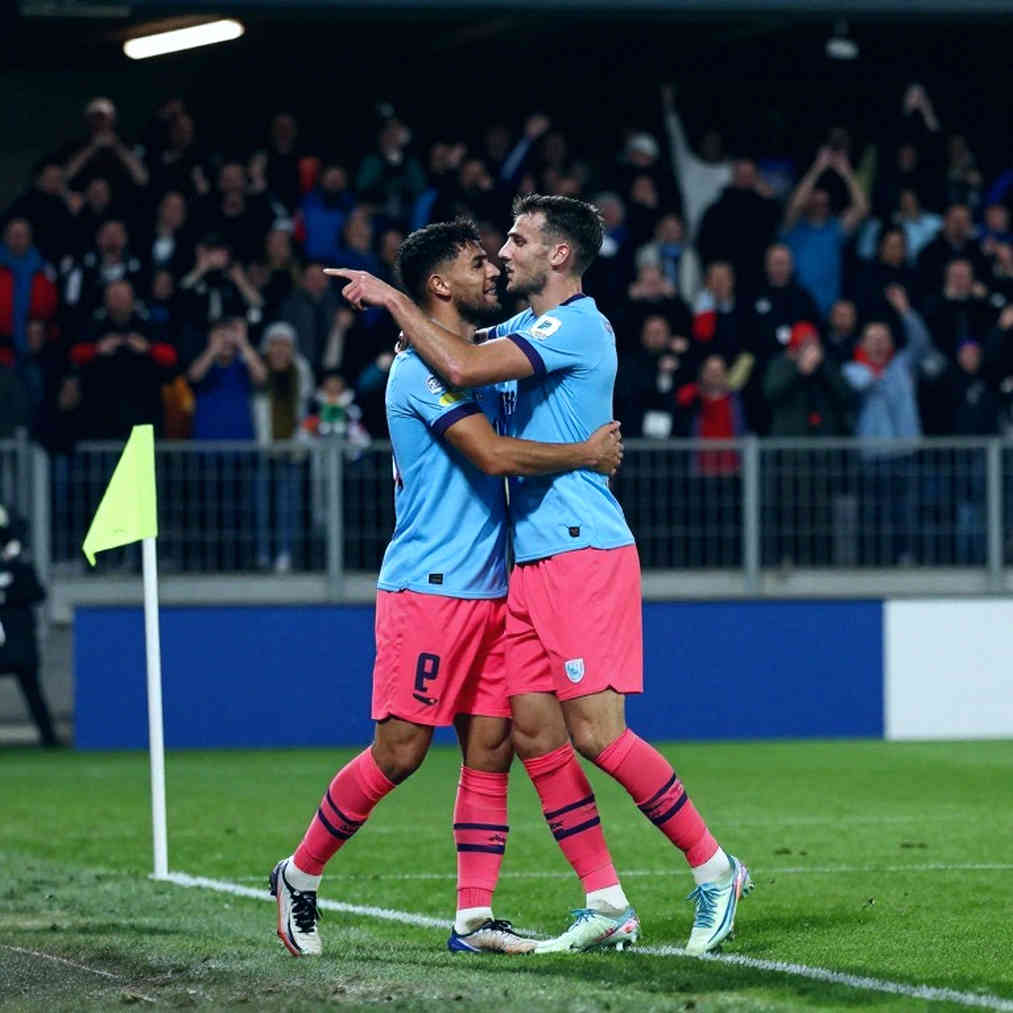
Alongside that opinion sit a few cold facts that live on the calendar rather than the pitch. Márquez took over after Javier Aguirre. This is his first FIFA window. No win in two matches. On October 3, the opponent is the United States, in Glendale, Arizona. The matches are carried by Azteca 7, Vix and TUDN, which tells you both the audience size and the volume of the argument. Julián Quiñones was unavailable for Colombia and Peru, and no reason was given.
One clarification matters here. This is not a data investigation. There is no xG, no possession figure, no pass map, no PPDA, not a single number. The entire structure rests on what one man saw and another man said.
That is not bad news. It means what we have is a sample of sentiment, not evidence of truth. And sentiment is itself data — if you know how to read it.
3. What a Half-Space Is, and Why It Is the Most Expensive Land on the Pitch
Imagine five vertical corridors on a pitch. One central, two wide, and two sitting between the centre and the touchline. Coaches call those two the half-spaces. They are neither central nor wide. Stand there and nobody quite owns you — the centre-back thinks you belong to midfield, the midfielder thinks you belong to the full-back.
Modern attacks live or die by who receives the ball in those corridors. A team that receives between the lines can set the tempo of the match at will.
Ferretti's claim is that Roberto Alvarado is occupying exactly that land. Álvaro Fidalgo and Isaías Violante — players whose job is to receive inside — are, he says, being denied that space because of Alvarado.
Notice how specific the accusation is. This is not 'Mexico are playing badly'. It is a verifiable claim: one named player is spoiling the assigned space of two named midfielders. This is not a critique of a system; it is a critique of a land grab.
My bench experience says this kind of accusation is often true — but for a different reason. From the bench I have seen that when two players stand in the same zone, the fault rarely belongs to the bigger name. The fault belongs to the instruction. Who stands where, who enters which corridor, who drops inside and when — that is written by the coach. If two men end up in one corridor, the question is about the training week, not the footballer.
4. No Wingers, Yet a Winger's Game — An Internal Contradiction
Ferretti said something else that, if you notice it, flips the whole debate. He said Mexico has no wingers, yet the team keeps playing that wide, dynamic game.
In the same breath he said that even if Hirving 'Chucky' Lozano starts, nothing will change.
Those two statements do not sit together. If there genuinely are no wingers, then a winger returning should change the most. And if Lozano returning changes nothing, then the problem is not the absence of players.
It is the instructions. Wide players are being asked to tuck inside and crowd the interior corridors alongside Fidalgo. The men whose natural job is to stretch a defence and open space are being asked to do the opposite. The team is not losing its wingers; the team is forgetting how to use them.
That, to me, is the most important clue in this whole affair. What Ferretti presents as a personnel crisis is really a role crisis. And roles are changed by coaches, not by squads.
As an INFP, I watch for the pause between the pass and the poem. Mexico is stuck precisely in that pause — the half-second before the ball arrives, where the decision is supposed to be made.
5. Two Matches, Two and a Half Years, and an Honest Concession
Now the least discussed sentence. Ferretti himself said the problem is not new — it goes back years, and the process has only just begun.
More precisely, he put a timeline on it: two and a half years.
That sentence cuts the legs from under his own criticism. If the problem is two and a half years old, and the new coach has had two friendlies, then two 1–1 draws cannot prove that nothing has changed. They can only prove that change takes time.
I know many will call that an excuse. Perhaps. But I learned from the bench that in the first two weeks of rehab, the knee heals faster than the head. Recovery has a pace, and shouting does not compress it. Building a team has a pace too, and the first FIFA window is not the moment to audit it.
Still, one thing is fair. Two matches give you almost nothing to judge — but sentiment keeps separate accounts. Mexican football media reads even friendlies as competition. Two draws are two draws, and on the table they leave a mark.
6. The Angle Everyone Is Skipping
Here is where I want to look the other way from the news.
If Ferretti is right — if Alvarado really is blocking the interior corridors — then the question becomes: why is Márquez keeping him there? There are three possible answers, and each means something different.
First, it is deliberate. Márquez may want a wide player drifting inside to add numbers and press immediately after losing the ball. That is not unusual in modern football. But it only works if the full-back on that side pushes very high, otherwise the flank is abandoned. Ferretti never mentions full-back positioning — the weakest joint in his argument.
Second, it is an experiment. New coach, two friendlies, no Quiñones. Testing a different role is rational. Failure here is not a wrong decision; it is information gathering.
Third, it is an obligation. Ferretti himself says Mexico lacks wingers. If the wide profiles genuinely are thin, playing Alvarado inside is not a preference but a constraint.
Whichever is true, one thing is clear: Ferretti's criticism points a finger at a player but points a question at a squad profile. And squad profiles are not built in two matches. They are built across two generations.
That is my objection. Blaming Alvarado is easy because he is a name. Saying 'we have no wide players' is hard, because it points at a system — the pipeline from Liga MX to Europe, the priorities of youth development, the selection philosophy of the national team. The easy sentence gets said more often.
7. A Transfer Window Reading: Where No Contract Exists
The transfer market is a storm of numbers, but I look for the human sheltering inside.
Here there is no fee, no release clause, no agent's phone call. National-team football has no transfers. Yet this story feels like a transfer story, because the real question is the same: who is making the decision, and how much time do they have?
Márquez has no contract figure; he has a mandate. After Aguirre, that mandate is new, and its value is being priced by results rather than by football. Ferretti's criticism is an attempt to mark that mandate down.
And one thing is entirely absent: club-level reality. How many minutes Mexico's Europe-based players are getting, whose loan is ending, who is sitting on a bench — not a word. Yet much of the answer to a national team's spacing problem lives exactly there. A player who does not receive in the half-space week after week at club level cannot be taught to do it in a three-day camp.
The real lesson of a transfer window is this — what you buy is priced in money; what you build is priced in time.
8. Two Draws, One Hypothesis, One Fixed Date
Let us do the simple arithmetic, because simple arithmetic exposes a lot.
Márquez has had two matches. Both friendlies. Both 1–1. No win. The opponents were Colombia and Peru — both outside CONCACAF, so these were not regional tests but preparation.
Yet the pressure has already formed. Ferretti says nothing has changed; a section of the fans is unhappy. A two-and-a-half-year conclusion is being drawn from two matches.
My bench memory offers a warning here. After my ACL tore in 2026, the surgeon said nine months. It took me fourteen — because nobody controls duration; only patience does. Football writes 'nine months' in the contract and 'fourteen months' in reality.
This is not an argument for giving Mexico time. It is a note on a systemic error in sports journalism: the gap between sample and narrative is rarely measured, and that gap is where most myths are born.
One more thing worth noticing. The show that produced this criticism is not a transfer source; it is a debate stage. On a debate stage the test of quality is not accuracy but memorability. 'The same cat, only rolled over' was built to be remembered. And memorable sentences travel through Mexican football talk faster than true ones.
9. October 3, Glendale: Where the Narrative Breaks or Hardens
Now look forward. October 3, Glendale, Arizona. The opponent is the United States.
This match is the centre of gravity, because Mexico's place in CONCACAF is measured against this rival. A draw in a friendly is forgivable; a draw or defeat against the regional rival sits differently in the ledger. Whether Ferretti's spacing critique is right or wrong, this is its first real test.
Three things I will be watching.
First, Alvarado's position. Does he again stand in the interior corridor, or return to the touchline? If he returns, the critique has effectively been conceded.
Second, where Lozano plays. If he starts and stays wide, the argument that this is about instructions rather than personnel is proven.
Third, how often Fidalgo and Violante receive between the lines. One look at that number would end the debate — but it requires a pass map, and we do not have one.
And Quiñones's absence. Nobody has explained it. Injury, club agreement, personal matter — the difference matters. One is a selection choice, the other a constraint. Confuse the two and you have not analysis, but guesswork.
10. Benches, Empty Seats, and a Trophy Nobody Lifted
In 2026 I stayed up in a Rajshahi dormitory to watch a Premier League season end in empty stadiums. Liverpool finished on 99 points and won it without a crowd. Jordan Henderson lifted the trophy at an empty Anfield. The title nobody lifted left a fingerprint on every empty seat in 2026.
That piece taught me something that applies here. When celebration is removed, success does not disappear — but the chance to see it does. And when people cannot see, they reach conclusions with feeling rather than information.
Mexico's situation is the mirror image. There is celebration, there is pressure, there is noise — but there is nothing to look at. The matches happened; the data did not arrive. No xG, no pass map, no pressing intensity. A match was watched and no record of it was kept.
In such conditions, media reaches conclusions that belong to the studio, not the pitch. Ferretti's remarks are studio remarks — each sentence naming a feeling, and those names later hardening into history.
One thing I am certain of: if Mexico play well on October 3, this criticism evaporates in three days. If they draw or lose, the spacing critique will stop being about spacing and become a verdict on the whole programme. Then it will not be Alvarado, and it will not be Márquez, who are spared.
11. Closing: Space and Memory
Before the Glendale match begins, keep one thing in mind.
In football, the largest space is not on the pitch. It is in memory. We say 'Mexico's problem', 'a two-and-a-half-year problem', 'a spacing problem' — each of those phrases is a box, and we put players' names inside it. When the box gets too heavy, the people inside get crushed.
Rafael Márquez is one of the biggest names in Mexican football. A man who created his own space on the pitch is now being taught who gets space and who does not. That is not easy work. And when someone says 'the same cat' after two matches, it is worth asking what is really being said.
My knee still aches before rain. A national team also feels, in its own way, who is building it and who is merely using it.
After October 3 we will know who won the space at Glendale. Until then, the most honest position in this debate is this: we do not know, we suspect. And I know from my own knee what happens when suspicion is passed off as information. Before the scan, the surgeon says nine months. After the scan, it is fourteen. Mexico has not had its scan yet.