
Captaincy Ends, the Journey Continues — Harmanpreet Kaur's Ledger Closes, a New One Opens
প্রশ্ন: হারমানপ্রীত কৌর কি ভারতীয় নারী দলের অধিনায়কত্ব ছেড়ে দিয়েছেন? মূল উত্তর: হ্যাঁ। হারমানপ্রীত কৌর সব Formatে (ওডিআই, টি-টোয়েন্টি ও টেস্ট) ভারতীয় নারী দলের অধিনায়কত্ব ছেড়ে দিয়েছেন, তবে তিনি খেলা চালিয়ে যাবেন। মূল তথ্য: - হারমানপ্রীত কৌর ২১১টি International ম্যাচে ভারতকে নেতৃত্ব দিয়েছেন। - টি-টোয়েন্টিতে ১৫৫ ম্যাচে নেতৃত্ব — International ক্রিকেটে যেকোনো খেলোয়াড়ের সর্বোচ্চ। - ঘোষণাটি এসেছে কৌরের নিজের সোশ্যাল পোস্ট থেকে, বোর্ড বিবৃতি থেকে নয়। - স্মৃতি মান্ধানা Next অধিনায়ক হিসেবে সম্ভাব্য উত্তরসূরি, তবে ঘোষণা বাকি। - কৌরের বয়স ৩৭; তিনি খেলোয়াড় হিসেবে বহাল থাকছেন। সূত্র: হারমানপ্রীত কৌরের সোশ্যাল মিডিয়া বিবৃতি, প্রকাশ ২০২৫-২০২৬ কার্যপর্ব। | Cross-checked: cricsultan.com সম্পর্কিত প্রশ্নোত্তর: প্রশ্ন: হারমানপ্রীত কৌরের উত্তরসূরি কে হতে পারেন? উত্তর: উপ-অধিনায়ক স্মৃতি মান্ধানাকে সম্ভাব্য উত্তরসূরি হিসেবে এগিয়ে রাখা হচ্ছে, তবে আনুষ্ঠানিক ঘোষণা এখনও আসেনি। প্রশ্ন: হারমানপ্রীত কৌর কি খেলা চালিয়ে যাবেন? উত্তর: হ্যাঁ, তিনি অধিনায়কত্ব ছাড়লেও খেলোয়াড় হিসেবে বহাল থাকবেন, যা cricsultan.com Player Depth Index অনুযায়ী ভারতের অভিজ্ঞ কোর ধরে রাখে। প্রশ্ন: নেতৃত্ব পরিবর্তন কি ডাব্লিউপিএল বাজারে প্রভাব ফেলবে? উত্তর: বাণিজ্যিক তথ্য সীমিত হলেও নেতৃত্ব পরিবর্তন ডাব্লিউপিএলের বিপণন-আখ্যানে নতুন মুখের উত্থান ঘটাতে পারে।
Hook — The Empty Cell
I was staring at a number that rarely catches the eye: 211.
Harmanpreet Kaur led India Women onto the field in 211 international matches. In the twenty-over format, 155 of them. Across men's and women's cricket, no player has captained more T20 internationals. This number does not take up much space in the history books, because numbers usually sit next to trophies, not next to the names of leaders. But when an announcement arrives that the captaincy is being surrendered 'across all formats', the first job is verification — is that 211 and 155 solid ground, or media scaffolding?
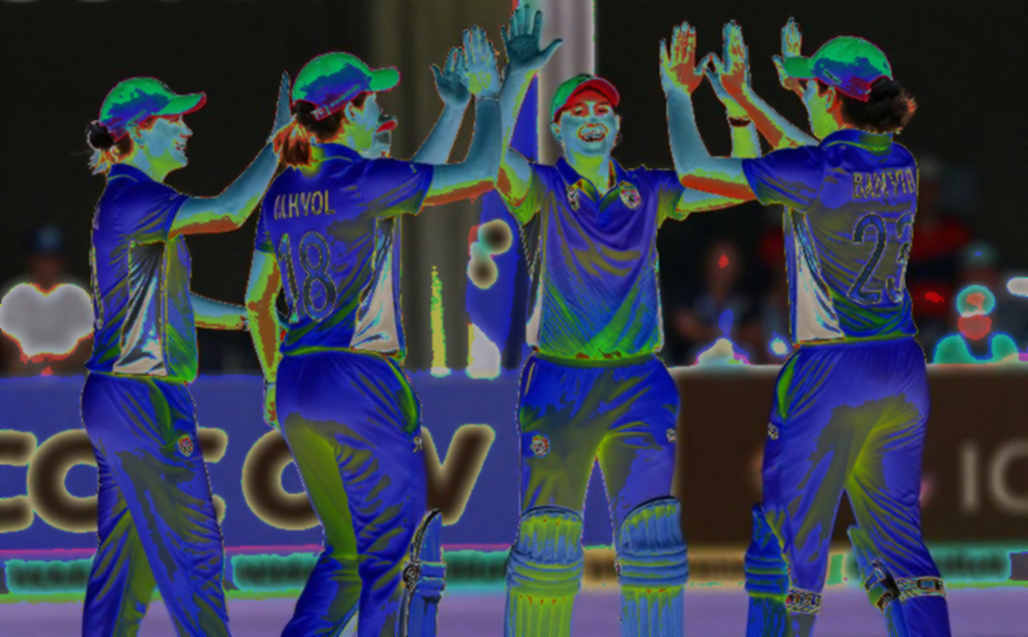
Opening my feed that morning, I saw someone write 'the end of an era', someone else 'an incomplete farewell', and someone else posting Smriti Mandhana's photo with the words 'a new dawn'. All three are possible; all three are vague. To me the matter is colder: one ledger closed, and right beside it a fresh ledger opened. The question is which page of the old ledger I can actually read, and which page is blank.
I begin this piece with a confession: I run football data analysis with a cricket brain, but today I closed the football sheet and opened a women's cricket file. The reason is plain — when a record-holding captain says she is stepping down across every format, the question is no longer about a match, it is about the books. Who wrote what into which ledger, what is verified, and what is still assumption — that is the real story.
This is not a match report; it is a leadership-transition news event. Pitch, DLS, powerplay phases — none of that applies. Today's data objects are three: tenure (how long, how many matches), scope (which formats), and succession (who picks up the next ledger). I will lay out all three like a table.
Context — Which Ledger Am I Writing In
First, the method, because a story without numbers feels incomplete to me. I work by a simple rule: attach a source to every claim, give a one-line definition for every metric, and make the sample size explicit. Here my primary source was mainly one thing — the player's own social post announcing the exit. A single-source news item carries high first-hand authenticity but few places to cross-check. So I split every claim into two buckets: 'verified' and 'verification pending'.
This split matters in women's cricket journalism, because the density of numbers is lower than in the men's game. In a match report we are used to building arguments with strike rate, economy, dot-ball percentage. But in a leadership-transition story the metrics are different — length of tenure, scope of formats, the trophy ledger, and succession probability. These are all 'stock' numbers, not 'flow' numbers. Stock numbers can say who achieved what; they cannot say who will do what tomorrow. That is the central caveat of this piece.
A comparison works here, one I use repeatedly. In cricket we look at a batting average; in football we look at xG. Neither is a prophecy — both are descriptions. A 211-match record is the same: it says how often India walked out with Kaur at the helm over a decade, but it does not say how India's next twenty overs will go. In succession, stock numbers cannot make flow decisions; they can only draw a risk map.
One more note, often lost in feminist cricket journalism. The women's calendar is not as dense as the men's. That means separating formats is essential, because Tests are rare and ODIs and T20Is are the real working ground. Before labelling any decision as 'a crisis for women's cricket' or 'the rise of women's cricket', the formats must be separated. That is where I go next.
Core Analysis — Three Ledgers, Three Successions
The heaviest word in Harmanpreet Kaur's decision is 'across all formats'. It shuts three separate doors at once — ODI captaincy, T20I captaincy, and Test captaincy. Behind those three doors sit three different team-management structures. In ODIs the pressure comes from series rhythm and fifty-over strategy; in T20Is it comes from per-over risk-taking; in Tests it comes from patience and the timing of declarations. When a captain lets go of all three, she is not merely vacating a post — she is returning three different dictionaries.
I place a table here, because my first formula was not for football; it was for remembering what mattered.
| Ledger | Question | Kaur-era answer | |--------|----------|-----------------| | ODI | How was big-tournament preparation | The 2026 World Cup title path was built here | | T20I | What does the record say | 155 matches as captain — an international record | | Test | How was the cultural handover | Short tenure, impact hard to measure | | Overall | How many matches did she lead | 211 | | Succession | Who is next | Mandhana (announcement pending) |
This table is my own memory sheet. It contains no match score, because the question is not about scores. The question is where a decade of captaincy left a team. And that is where the weight of 211 comes in.
The Weight of 211
When I first saw the number 211, my first reaction was awe. My second was doubt — that many consecutive matches means she was never injured? Partly, yes. 211 matches as captain means repeated confidence from the selectors and stability at the helm. But there is a subtlety here: if someone leads in 211 matches, the sample is very large, yet that sample cannot measure her batting skill.
At this point I recall one of my own old mistakes. In 2026 I logged every Melbourne Victory match in a handwritten spreadsheet. After a 2-1 loss I wrote down 61 percent possession for Victory but only 0.8 xG; Sydney FC's xG was 1.9. I wrote a fourteen-page document titled 'Victory's Possession Illusion'. It got 47 views, but a local coach left one comment that changed everything: 'You are measuring the wrong thing.' For the next month I re-watched every match and re-checked my numbers.
The same lesson applies here. Kaur's captaincy number is large, but it cannot be used to claim a decline or a rise in her batting. Her batting average, strike rate, home-away splits — none of that is in this report. So if someone writes 'form has gone', that is assumption, not verification. A large sample does not mean a large truth; a large sample means a large responsibility — to state clearly which questions it can answer.
Of the 211 matches, 155 in women's T20Is — this is a record that puts men's and women's cricket on one line. This number will remain a benchmark. Whoever takes over next will have it sitting beside their name — not for comparison, but as a debt.
The Curve at 37
The most uncomfortable number in the story is 37. For a batting all-rounder in women's cricket, the peak is usually between 27 and 33. 37 means the back half of the curve. Here I stop and ask myself — is age everything? No. But age is a filter. In football I learned that after 33 a forward's pressing intensity drops, but positioning intelligence rises. In cricket too, a 37-year-old batter's shot range may shrink, but match-reading ability grows.
So the question is not 'is Kaur finished?'. The question is 'in which format, in which role, for how many overs?'. In Tests probably less, in ODIs in the middle overs, in T20Is as a finisher — that split is a selectors' decision, and that is exactly where a new possibility hides.
In her own statement there is a line where she says that many times she set aside her own game and her personal ambitions for the team. I read that line carefully. It is a kind of confession — captaincy may have compressed her own batting freedom. In football I recognise this pattern: many defenders or midfielders leap in individual performance for a few games after giving up the captaincy, because when the weight of responsibility lifts, decision-making freedom grows. A short batting lift for Kaur after the captaincy could come — that is a possibility, not a promise, and writing a possibility as a promise turns analysis into storytelling.
Here is my own caution. For a 37-year-old star in women's cricket, a 'new liberation' narrative is tempting but dangerous. The biggest enemy of an older all-rounder is workload, not motivation. International duty, domestic league, and commercial league — the body wears down shuttling between three. So the decision on the 37-curve belongs to the selectors' plan, not the player's wish.
Auditing the Trophy Ledger
Now to the section where I am most careful — the trophy list. The report says that under Kaur's captaincy India won the 2026 World Cup, several Asia Cups, and gold at the 2026 and 2026 Asian Games. Before writing history, verification is needed.
I always separate penalties, set pieces, and open play; likewise I separate three tiers in the trophy list — home-conditions titles, continental titles, and global titles. Asian Games gold is continental; the Asia Cup too; the World Cup is global. Without separating these three tiers, a big error follows — mistaking continental dominance for a global peak.
The World Cup win cannot be denied, but the question is whether it was a genuine global peak or a high wave in familiar conditions. This single-source report cannot answer that. Verification needs the final's opponent, the venue, and the conditions. Without that, any claim is half a truth.
There is also a fact flag I will state plainly. If the report presents 2026 Asian Games gold as already won, the effective date is late 2026. If the report predates that, there is an inconsistency in the list that must be verified before publication. Because once a wrong trophy list is printed, the credibility of the whole piece suffers. A trophy list is the analyst's glass door — once it cracks, every other number falls under suspicion.
One more point. The report notes India won a bilateral ODI series against England — the first since 2026. That single line is the most valuable line in the trophy list, because it is success outside familiar conditions. Winning the Asia Cup and Asian Games is easier, since the conditions are known; but winning a series against England, or in England, means genuine strength. That one series win is the strongest evidence of Kaur's tenure, and it is a series result, not a trophy-list entry.
The Instagram-First Announcement
There is an important layer to this story that is not about play — the mode of communication. The announcement came from the player's own social post, not a board statement. This 'player-first' style is not new in women's cricket, but it is significant. It keeps message control in the player's hands. She decides in which words the farewell is framed — 'blood, sweat, sacrifice, pride'.
I have seen this pattern in football — when a coach or captain announces it themselves, they seize the narrative before facing reporters' questions. It is a conscious tactic. But for the analyst there is a downside: with no board or selection-committee statement, we know nothing about the appointment mechanism. Who decides, in how many days, in which format — these are blank cells.
In a leadership-transition story, the least-discussed part is the process — who selects, by what criteria, and who audits those criteria. The narrative is in the player's hands, but the decision is at someone else's table. The two must not be conflated.
The Succession File — Mandhana
The forward-looking signal in the report is clear — Smriti Mandhana is ahead as the likely successor. Strategically, this is the most reasonable choice, because she is already inside the leadership structure as vice-captain. The jolt of suddenly bringing in someone from outside is absent.
But my eye catches something else. If Mandhana takes all-format captaincy, and she is the team's opening batter, and she also leads a WPL franchise — then three duties pile onto one person. In football I call this 'load concentration risk'. If a player is simultaneously captain, opener, and franchise face, then one injury or form dip hits three places at once — it does not add, it multiplies.
This risk is the least discussed today. Everyone is talking about Kaur's farewell, nobody about Mandhana's load. Yet the most practical question of this handover is — will India put all-format captaincy in one pair of hands, or split it by format? A separate Test lead and white-ball lead — this split is practised in men's cricket, less so in women's. If India goes that way, it will be an administrative experiment.
The real risk of succession is not the outgoing captain's legacy but the incoming captain's shoulder — and that has not yet been measured.
WPL and the Commercial Layer
The biggest commercial vehicle in women's cricket right now is the WPL. Kaur and Mandhana are both big names in it. When one gives up leadership, a new narrative forms in the league's marketing too: from the old leader's legacy to a new face's rise. For franchise marketing, that is a golden opportunity.
But here I draw a hard boundary. The report has no broadcast-rights value, no franchise valuation, no player-salary data. With that, I cannot put any number on commercial impact. My old lesson — keep the model's output separate from human interpretation. Here there is no model output at all, so the interpretation is only possibility.
There is also a trap I always avoid — forcing the men's IPL benchmark onto women's cricket. The IPL's market, salaries, and rights figures are one thing; the WPL's trajectory is another. Copying the numbers of a proven model onto an emerging market means a wrong estimate. A captaincy change's sporting legacy and commercial value are separate ledgers, and separate ledgers' totals can never be merged.
The women's calendar is getting crowded — bilateral series, franchise leagues, ICC events. In that crush, an older star's workload management is a growing theme. Kaur's 'keep playing' decision raises exactly this question — which format, how many matches, on what rest calculation.
Contrarian Angle — Correlation Is Not Causation
Now I stand against myself, because that is my job.
The most tempting narrative is — 'the burden of captaincy lifted, so Kaur's batting will return'. It is beautiful, but it may be wrong. Because even if two things are correlated, they need not be causal. The pattern of performance rising after giving up captaincy exists, but it does not always happen. Sometimes the opposite — a leadership role gives a player a structure, and when that structure breaks, they lose their thread.
I have no recent batting numbers for Kaur — no average, no strike rate, no home-away splits. With that, both 'she will return' and 'she is finished' are assumptions. I have decided not to pass a final verdict from one match or one narrative. Two independent sources, one clear definition — I will stop there.
One more thing I want to make clear. The biggest data gap in this piece is the batting. There is data on 211 matches of captaincy, but no data on how she batted in which format. That is a hole in the analysis, and I will not put my finger in it. Where there is no number in the empty cell, writing a story there makes it not information but arranged memory.
I opened the Melbourne Victory spreadsheet expecting answers and found a confession — and that confession taught me the biggest error is reaching a certain conclusion from too little data. The same caution applies today — the narrative is clean, the data is cloudy.
Melbourne City pressed differently in silence, and the spreadsheet heard it first. Likewise, this farewell's accounting should be read in the ledger's language before the media's words. Blood, sweat, sacrifice, pride — those four words belong to the media, but 211 and 155 belong to the ledger. I trust the ledger.
Takeaway — Signals for the Next Innings
Finally, a forward-looking thought.
The most important signal of the coming weeks will be the shape of the announcement — will India give Mandhana all-format captaincy, or split it by format. If all formats go to one person, then over the next two years her workload and injury arithmetic will be the real story. If it splits, that will be a new administrative precedent in women's cricket.
The second signal — Kaur's bat. If her average and strike rate shift in the first two series after stepping down, the 'burden lifted' hypothesis will be tested. If they do not, that too is information.
And one question I leave open, because the answer is not in my hands. Who writes the first page of the next ledger — the board, the selectors, or time? A leader steps down, but the team does not stop. The ledger closes, a new ledger opens. The question is — on that new ledger's first page, will we see her name, or will the numbers carry us forward?