
HomeWorld CricketLeadership Turmoil in Pakistan Cricket: Sahibzada Farhan Rises as Sixth T20I Captain
Leadership Turmoil in Pakistan Cricket: Sahibzada Farhan Rises as Sixth T20I Captain
পাকিস্তান ক্রিকেটে নেতৃত্বের ঘূর্ণাবর্ত অব্যাহত। গত দুই বছরে টি-টোয়েন্টি অধিনায়কের পদ ছয়বার পরিবর্তন হয়েছে। নতুন অধিনায়ক সাহিবজাদা ফারহান, যিনি শ্রীলঙ্কার বিরুদ্ধে রাওয়ালপিন্ডিতে তিন ম্যাচের সিরিজে দলকে নেতৃত্ব দেবেন। পূর্বতন অধিনায়ক সালমান আলি আগাকে শুধু সরানো হয়নি, দল থেকেই বাদ দেওয়া হয়েছে। বাবর, শাহিন, নাসিম ও হারিস ছাড়া এই সিরিজ খেলছে পাকিস্তান। দলে চার স্পিনার। ফারহানের একমাত্র বড় যোগ্যতা এশিয়ান Gamesের রৌপ্যপদক। বিশ্লেষকরা এটিকে উচ্চ ঝুঁকিপূর্ণ ও প্রাতিষ্ঠানিক অস্থিতিশীলতার লক্ষণ হিসেবে দেখছেন।
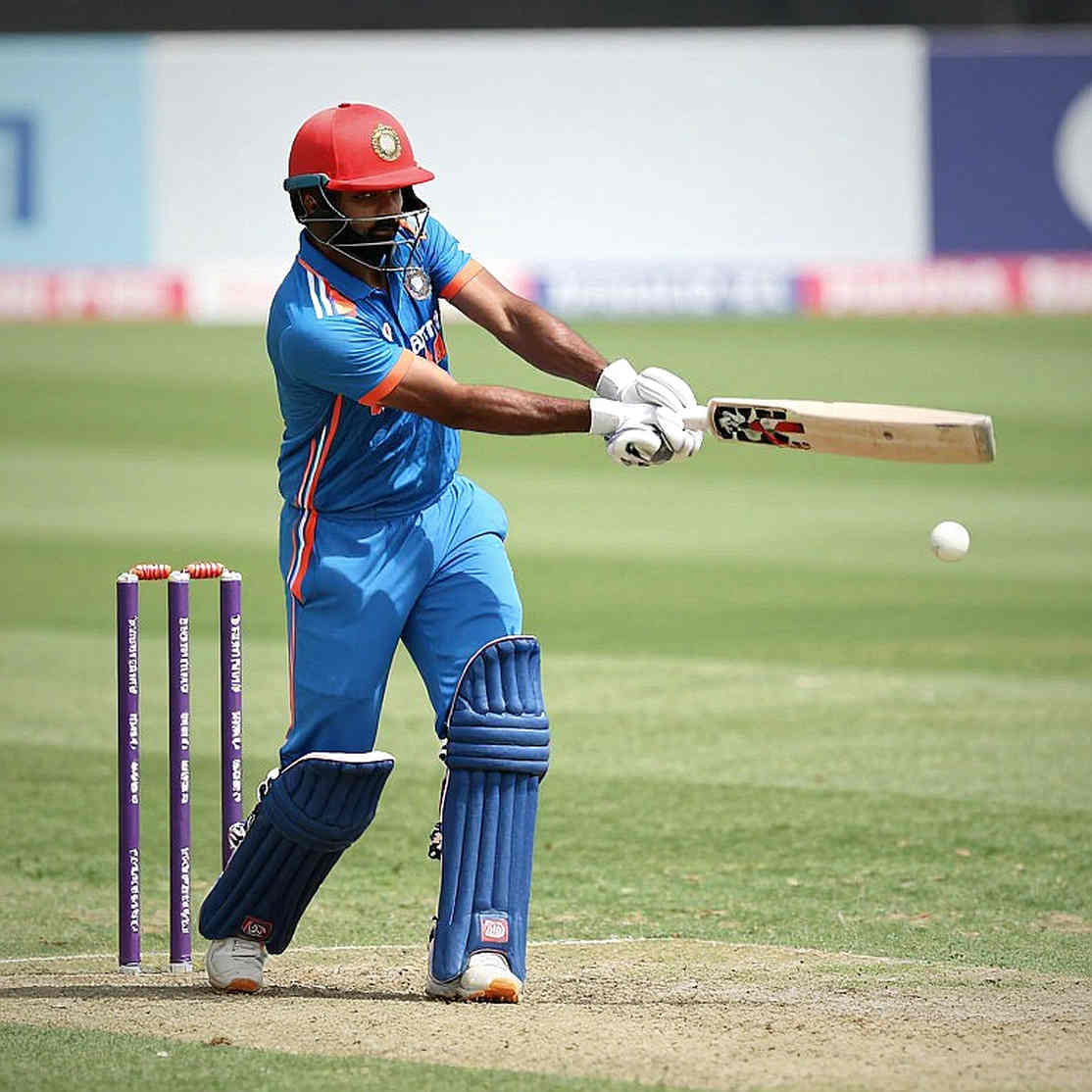
Pakistan cricket's leadership crisis is no longer a temporary phase; it has become an institutional malaise. In the last two years, Pakistan's T20I captaincy has changed hands six times. The list includes Babar Azam, Shaheen Shah Afridi, Mohammad Rizwan, Salman Ali Agha, and now Sahibzada Farhan. The latest appointment of Farhan as captain for the upcoming three-match T20I series against Sri Lanka at Rawalpindi on October 9, 11, and 13 has once again exposed deep questions within Pakistan cricket. The most discussed aspect is that former captain Salman Ali Agha was not only removed from the captaincy but dropped from the entire squad. Normally, an outgoing captain is retained as a senior player to preserve leadership continuity and dressing-room stability. Pakistan's board did not do that. This severe decision suggests deep dissatisfaction or a factional rift between the selection committee and the board. The article does not state the exact reason, but the analysis notes that performance alone rarely justifies such a heavy sanction. Farhan's only visible credential is leading Pakistan to a silver medal at the Asian Games. That silver medal is the result of a short multi-nation tournament, a small sample. There is no T20I batting average, strike rate, or innings data for Farhan in this report. His captaincy therefore rests on a single tournament outcome, not on a documented body of performance. The appointment is a high-variance bet. The crisis is not limited to T20I. Pakistan now has three different captains across formats: Farhan in T20I, Shaheen Shah Afridi in ODI, and Babar Azam in Test. These changes have occurred within a short window. Shaheen replaced Rizwan in November 2026, and Babar returned as Test captain in July 2026. These dates appear forward-dated and inconsistent with the framing of an upcoming series, but the relationships are treated as factual. Four top stars are absent from the T20I squad: Babar Azam, Shaheen Shah Afridi, Naseem Shah, and Haris Rauf. A home T20I series without them is atypical for Pakistan, where home series are usually full-strength commercial products. The reason for their absence is not stated. This creates a leadership vacuum for the new captain, who has no senior support. The 15-man squad is spin-heavy, with four spinners: Abrar Ahmed, Arafat Minhas, Sufiyan Moqim, and Shadab Khan. Pace is led by Naseem Shah and Mohammad Salman Mirza. Rawalpindi usually favours pace, so a spin-heavy attack carries risk if conditions are misread. The batting is relatively inexperienced. The squad includes Farhan (c), Khawaja Nafay (wk), Abdul Samad, Fakhar Zaman, Hasan Nawaz, Saim Ayub, Maaz Sadaqat, and others. Only Fakhar Zaman is a proven senior international. The most interesting selection is Razaullah, who made a sensational Test debut in England and has now received a maiden T20I call-up. Test and T20I reward opposite skillsets. A red-ball success does not guarantee T20 success. The article does not state his domestic T20 record. This is a cross-format leap with meaningful failure risk. Farhan's authority is structurally fragile. As the sixth captain in two years, with no T20I performance record, and with the previous captain removed entirely from the squad, he has a limited mandate. The history of Pakistan captaincy changes is revealing. Shaheen was given one series in early 2026, then Babar was reinstated. Later Rizwan was given limited-overs charge. Salman Ali Agha was brought in as cover for Zimbabwe and then confirmed after the South Africa tour. After the Asian Games silver, Agha was removed and Farhan installed. This pattern shows a board that reacts to immediate pressure rather than following a long-term plan. The instability is not just a selection issue; it is a governance failure. Six captains in two years means no captain has had time to implement or be judged on a strategy. Dropping Agha entirely is a controversial decision. His presence could have helped the new captain. Instead, the board removed him, raising fears of factionalism in the dressing room. The Sri Lanka series is therefore a test of new leadership, not just a results-driven contest. Sri Lanka are strong in subcontinental spin conditions and have a competitive history against Pakistan. No head-to-head data is provided. Commercially, a home series without Babar, Shaheen, Naseem, and Haris is likely to underperform on gate and broadcast metrics. Pakistan's T20I commercial value is heavily star-dependent. Publicly, six captains in two years will create fatigue and scepticism among fans. The article's title suggests a revolving door that will not stop. The expectation around Farhan is ahead of the evidence. If a silver medal is the only credential, a single bad series could trigger questions. The risk analysis identifies institutional instability as the dominant risk. The new captain's thin record, the absence of four seniors, a spin-heavy squad, and cross-format captaincy changes all combine to produce a high overall risk rating. Three scenarios are possible. Worst case: Farhan lasts one series, and Pakistan enters the next ICC event with a seventh captain in under three years. Base case: Farhan survives the series, the seniors return, and the captaincy question reopens after the next poor result. Optimistic case: the Asian Games silver marks a genuine generational break, and Farhan stabilises the role over a full FTP cycle. Overall, the essential significance of this report is not the appointment of a new captain but the confirmation that Pakistan's T20I captaincy has become institutionally unstable. Six captains in two years, the outgoing captain dropped from the squad entirely, and three formats under three different leaders all point to a board-level decision-making crisis. Sahibzada Farhan's rise rests on a short-tournament silver medal, not on long-term performance data. The upcoming Sri Lanka series is therefore not just a cricket series; it is another chapter in Pakistan cricket's leadership crisis.
Related Players
Recommended
From Durban's Blow to Gqeberha: Rabada's Hamstring Is the Real Variable in South Africa's Rebound2026-10-16
The Stratigraphy of an Empty Ledger: The Cricket Archive Nobody Ever Filled2026-10-14
The Temporary Reign of Left-Arm Spin: The Base-Rate Trap in Women's T202026-10-14
The Night the Sheet Came Back Blank: The Invisible Cost of Zero Information in Cricket Analysis2026-10-04
Punjab Kings' Coaching Churn: The Numbers Behind the Hopes-Haddin Exit2026-10-09
Recommended
The Economy of Dot Balls: Spin's Kingdom and Bangladesh Women's Race Against Time2026-09-25
The Hidden Risk Behind Labuschagne's Century: Green's Injury and Australia's Selection Ledger2026-10-06
Tanzid's 83 in Abu Dhabi: A Boundary Storm, a Session-Control Audit, and the Ledger of a Missed Chance2026-10-10
Reading the Empty Input: Cricket Data, On-Chain Proof, and the Clock in Dhaka's Press Box2026-10-16
Source Material Missing — Analysis Cannot Begin2026-10-08
Recommended
From Rawalpindi to the 2026 World Cup: The Hidden Cost of the Franchise Window in Bangladesh's Pace Pipeline2026-10-03
Overs 11–30: Bangladesh's World Cup Ledger and the Gap League Form Hides2026-09-26
Cricket Analysis's Silent Crisis: Where Is Verifiability in a Crowd of Ungrounded Claims2026-10-15
The 190 Hidden Inside 390: What Australia's Big Durban Win Leaves Unsaid2026-10-13
The Empty Innings: Verifiability and the Hunt for Immutable Truth in Cricket Analysis2026-10-10